
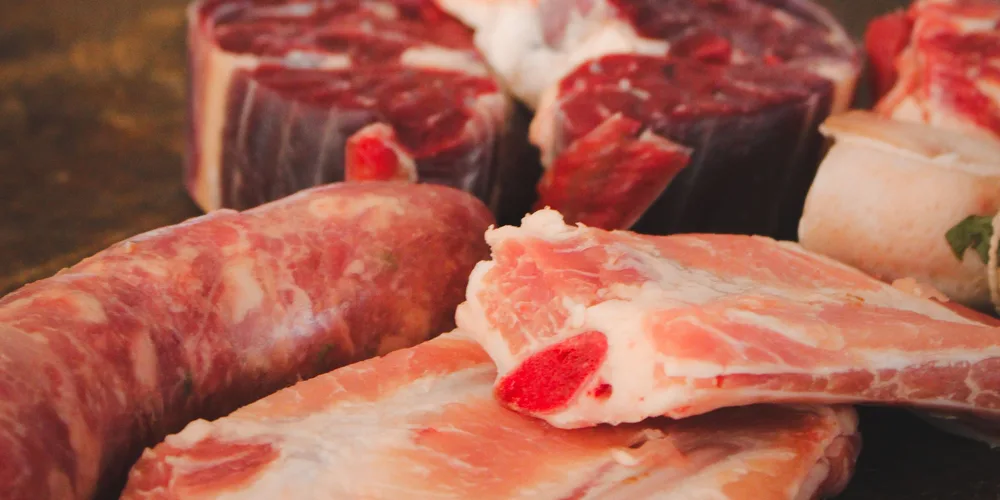
Red borscht — the beetroot, cabbage and potato soup — is an everyday dish in canteens, in restaurants with a lunch menu and in office catering. Its flavour is made in the pot, from bone-in meat simmered slowly. In the wholesale pork range, as with beef and poultry, there are a few items that suit this dish exactly. Below: what goes in the pot and how to work out how much meat you need.
The borscht rule: bone-in meat, not lean meat
A good broth needs bone, connective tissue and a little fat. Simmered slowly, they give flavour and body, while the meat stays tender. Lean boneless meat, such as tenderloin or chicken breast, makes a thin broth and dries out after an hour on the heat. That is why, for borscht, you buy bone-in cuts or cuts with meat and fat mixed together.
Many kitchens work in two steps: they first simmer the bone-in meat for the broth, then take it out, bone it and cut it into pieces for the bowl. Choose the cut by how much the broth matters to you and how much the meat in the bowl does.
Pork: ribs, bone-in belly, shoulder and knuckle
- “Pork ribs, frozen, 10 kg” — ribs with meat, cut for cooking straight away. The product page even recommends them simmered for soups. One rib per portion looks good in the bowl, and the 10 kg case holds stock from one week to the next, at −18 °C.
- “Pork belly, bone-in” — chilled, the ribs with their meat and fat in a single piece. It gives a very rich broth; cut it into pieces before simmering, or simmer it whole and portion it afterwards.
- “Pork shoulder, boneless, frozen, 20 kg” — the cut balanced between meat and fat. It has no bone, so it does not make the broth on its own, but it gives cubes of meat that do not dry out. Use it alongside the ribs when the menu promises “borscht with meat”.
- “Pork knuckle” — chilled, the hock with meat rich in collagen. Simmered slowly, it binds the broth and gives a deep flavour; it is the option for a thick winter borscht.
Where each cut sits on the carcass and what else it is used for is explained in the guide to pork cuts.
Beef: ossobuco for classic borscht
Borscht with beef has a deeper flavour and a darker broth. From the catalogue, the right cut is “Beef ossobuco Skott Smeat, frozen” — beef shank slices with bone and marrow. Simmered slowly, the meat comes off the bone and the marrow enriches the broth. One slice means one portion, so the maths is simple. The rest of the beef range, from steaks to tenderloin, is described in the guide to frozen beef.
Poultry: borscht with chicken
For a lighter, lower-cost borscht:
- “Whole chicken Qualiko, chilled, 2.0–2.3 kg” — the large carcass, whole. The back and bones go into the broth, while the breast and legs give the meat for the bowl.
- “Chicken leg quarters Qualiko, block-frozen (monolith), 10 kg” — leg with back, bone-in and skin-on. The product page calls it the classic base for soups; the block is thawed whole, so it suits kitchens that cook one large pot at a time.
How to work out how much meat you need
Bone-in meat loses water and fat when it simmers, and part of its weight is bone. That is why there is no figure that works for every kitchen — there is a method:
- Cook a test pot to your recipe and weigh the raw, bone-in meat that goes into it.
- Count how many portions you serve from that pot.
- Divide the raw meat weight by the number of portions to find how much raw meat one portion needs.
- Multiply by the portions planned per day or per week and add a small margin.
Worked example: if your test shows that one portion takes 150 g of raw bone-in meat, 200 portions need 30 kg. The 150 g is only the example — use what you weighed. For the cost per portion, the full method is in the guide to meat yield and cost per portion.
What gets confirmed by phone
- Stock. The pork and beef in the catalogue are not Qualiko products; the pages for the bone-in belly, the knuckle and the ossobuco carry the note “Check stock with our sales team”, and stock is confirmed with every order.
- Price: per kilogram, VAT included. Where a product page shows a wholesale price, it is indicative and carries the date it was updated; otherwise it says “Price on request”. The final price is confirmed by our sales agent.
- Format: chilled or frozen, and the packaging of the available batch.
How to order
The minimum order is 70 kg and can be made up of several items — for example ribs, shoulder and chicken — in the same delivery. Send your list through the order request form or call +373 79 88 33 79 (WhatsApp, Viber, Telegram). In Chișinău, delivery usually takes 24–48 hours and costs 100 lei, free over 150 kg; we deliver across Moldova by refrigerated transport. We do not process online payments, and returns are not accepted.
Frequently asked questions
What is the best pork for borscht?
Bone-in meat: pork ribs and bone-in pork belly. The bone and fat give the broth flavour and body, and the meat stays tender after simmering. For cubes of meat in the bowl, add shoulder.
Can borscht be made with beef?
Yes. Beef ossobuco, shank slices with bone and marrow, is simmered slowly until the meat comes off the bone and gives a rich broth. Each slice can be portioned separately.
Does chicken borscht work?
Yes, it is lighter than pork borscht. A whole chicken or chicken leg quarters, with bone and skin, make a tasty broth; the meat is taken out, boned and returned when serving.
How much meat does a pot of borscht need?
It depends on your recipe and portion. Weigh the raw meat that goes into a test pot and count the portions served; divide and you know how much raw meat one portion needs.